

Northline Windows & Doors
Publisher
When Is It Time to Replace Your Exterior Door?
Exterior doors usually don't fail in one dramatic moment.
More often, they slowly become annoying.
The door starts catching on the frame. A little cold air sneaks in around the edges. The lock that used to line up perfectly now needs an extra push before it catches. Maybe you can see daylight around part of the weatherstripping, or the bottom of the door has started showing the effects of years of snow, rain and wet boots.
You can live with those little things for quite a while. Eventually, though, an entrance that technically still “works” can stop working particularly well.
Your Door Will Usually Give You a Few Clues
A draft around the entrance is one of the more obvious signs, particularly once Ottawa gets into the colder months.
But pay attention to how the door actually operates too.
If you're lifting the handle to get the latch lined up, pushing your shoulder against the door to close it or fighting with a lock that used to work smoothly, something has changed. The issue could involve the door itself, the hardware, the frame or how everything is sitting within the opening.

Then there are the things you can actually see: worn weatherstripping, deterioration around the threshold, damaged finishes, moisture-related damage or gaps that weren't there before.
One issue doesn't automatically mean you need a new door. When several start appearing together, however, the entrance deserves a closer look.
Ottawa Winters Have a Way of Finding the Weak Spots
A small gap around an exterior door can be pretty easy to ignore on a mild September afternoon.
January is less forgiving.
Your entrance has to deal with cold temperatures, snow, rain, summer heat and repeated seasonal changes year after year. If the door isn't sealing properly anymore, winter is usually when you'll notice it most — especially when you're standing near the entrance and can actually feel the difference.
That doesn't mean an older door needs replacing simply because it's old.
Condition matters more than the birthday.
If the door still operates properly, seals well and the frame is in good condition, there may be nothing urgent to change. If you're dealing with recurring drafts, difficult operation and deterioration around the entrance, replacement starts becoming much easier to justify.
Replacement Doesn't Mean Recreating the Same Entrance
This is where replacing a door becomes a little more interesting.
If you've had the same solid white front door for twenty years, you don't necessarily need a newer version of the exact same thing.
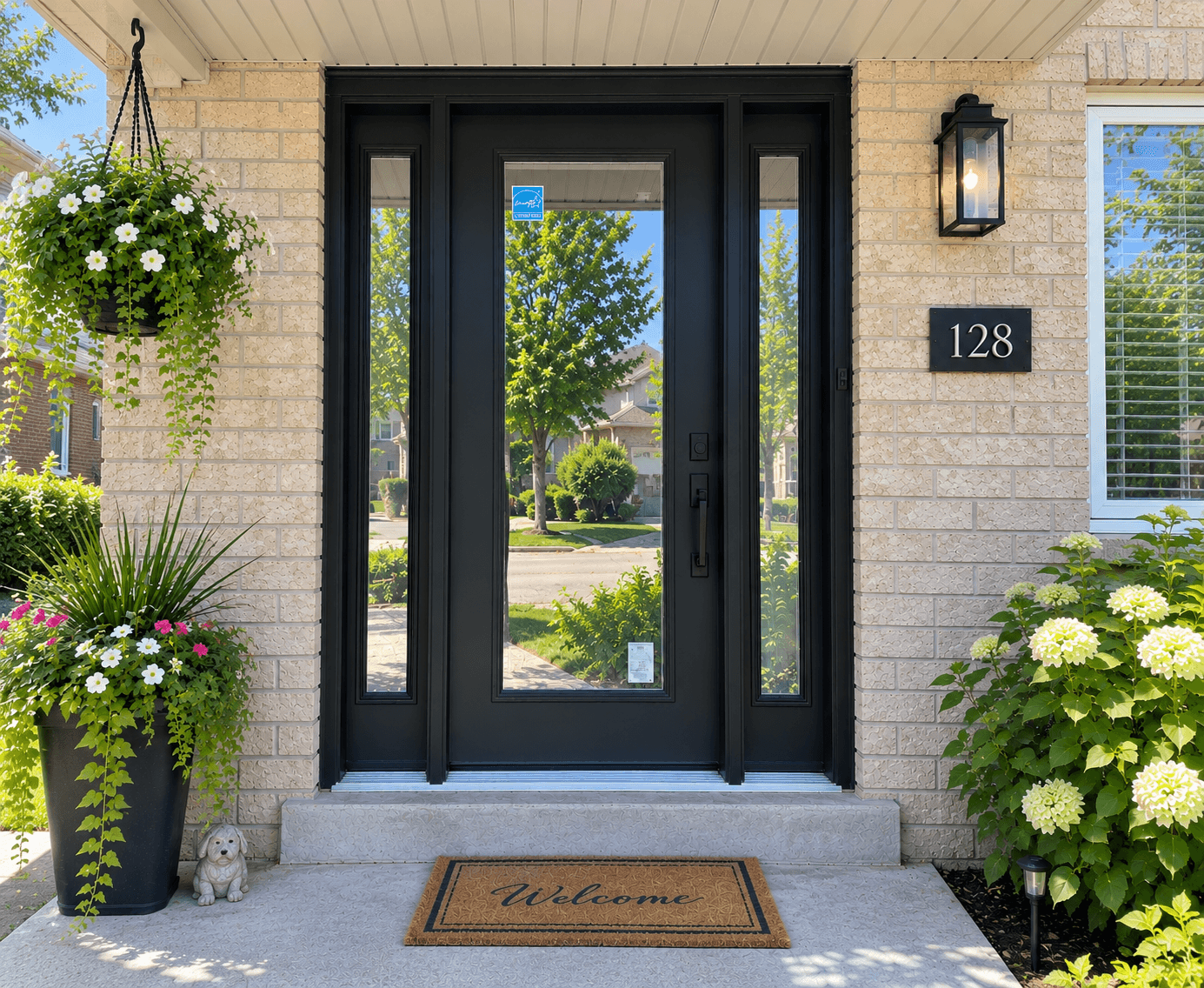
Maybe the hallway behind it is dark and you'd like to introduce some glass. Maybe the entrance is wide enough for sidelights or a different configuration. Maybe you want a darker colour, a more modern panel design or hardware that better suits the rest of the exterior.

The material can change too. Depending on what matters most for the entrance, you may find yourself comparing steel doors with fibreglass doors rather than simply replacing whatever material was there before.
You're replacing the door anyway. It's worth asking whether you'd actually choose the old one again.
Think About How You Actually Use the Entrance
The front entrance and the side door don't necessarily have the same job.
Your front door contributes to the appearance of the house, but it still needs to feel secure, seal properly and handle everyday use. A side entrance might be the door everyone in the family actually uses — groceries come through it, kids run through it and the dog is waiting beside it six times a day.
The backyard entrance introduces another set of priorities. There, you may care more about natural light, the view outside and easy access to a deck or patio.
That's why we wouldn't recommend choosing every exterior door around the same checklist.
Look at the Whole Entrance
Sometimes the door itself isn't the only thing that needs attention.
The frame, threshold, weather seals, glass, hardware and surrounding opening all contribute to how the entrance looks and feels. Replacing a beautiful door while ignoring problems around it doesn't accomplish much.
Northline looks at the entrance as a complete system before deciding what should change.
The goal isn't to replace more than necessary. It's to make sure that when the work is finished, the door closes easily, seals properly, locks the way it should and actually feels like it belongs on the house.
That's a much better reason to replace an exterior door than simply deciding the old one has been there long enough.


Door Replacement
Replacing an exterior door can look pretty straightforward from the outside: take the old door out and put the new one in.
In reality, a good replacement starts well before anything gets removed. The existing entrance needs to be measured properly, the condition of the opening needs to be understood, and the new door needs to be configured around where it's going and how you actually use it.
That matters in Ottawa, where a small problem with fit or sealing can become considerably more noticeable once the temperature drops.
Start With the Entrance You're Replacing
Before choosing a new door, it helps to understand what you want to improve about the old one.
Maybe the entrance feels drafty every winter. Maybe the door rubs against the frame or doesn't latch cleanly anymore. Sometimes nothing is particularly wrong mechanically — you simply want more natural light, a different style or an entrance that better suits the rest of the house.
For a main entrance, that might mean exploring different exterior doors and reconsidering the material, glass and overall configuration rather than recreating what's already there.
A side entrance door may have completely different priorities. If that's the door your family actually uses every day, durability, security and easy operation may matter more than making it the architectural centrepiece of the house.
Start with what you want the entrance to do better. The right door becomes much easier to choose from there.
Steel, Fibreglass & Different Door Materials
Once you understand the entrance, material is one of the bigger decisions.
Steel doors are a practical choice when strength, durability and value are priorities. They can still be configured with different colours, panel designs, glass and hardware, so choosing steel doesn't mean settling for one basic-looking entrance.
Fibreglass doors give you another direction, particularly when appearance is a larger part of the project. Textured and wood-look finishes can create the character of a more traditional wood entrance without requiring you to choose an actual wood door.

Neither material automatically makes sense everywhere.
A formal front entrance, busy side door and sheltered secondary entrance can all ask different things from the door. Choose the material around the entrance rather than choosing the entrance around the material.
Single, Double & Oversized Front Entrances
Replacing the door can also be an opportunity to reconsider the entrance itself.
A classic front door keeps things relatively straightforward with a traditional single-door configuration that can still be customized through colour, glass, panels and hardware.
If the opening is wider, double front doors can create a more substantial entrance while giving you considerably more room when both doors are opened. Moving a new sofa through the front entrance suddenly becomes a much less interesting Saturday afternoon.
For taller or unusually proportioned openings, oversized front doors provide another option. Instead of making a larger entrance feel like it was designed around a standard-size door, the door can be planned around the scale of the opening.
Sidelights and transoms can also bring more glass into the entrance without necessarily changing the door itself.
Patio & Garden Doors Work Differently
The entrance at the back of the house usually has a different job.
Here, the conversation tends to shift toward natural light, the backyard view, available floor space and how easily people can move between indoors and outdoors.
Patio doors use a sliding configuration, giving you a large area of glass without requiring clearance for a swinging door. That can be particularly useful when furniture, a deck or a smaller patio makes space around the opening valuable.
Garden doors provide a hinged alternative with more of the look and operation of a traditional exterior entrance.
Both can connect the same two spaces. They just create a very different experience doing it.
Custom Measurement Comes Before Installation
Once you've settled on the type of door, the existing opening needs to be measured accurately.
Northline exterior doors are custom-made for the entrance, so those measurements are used to determine what needs to be manufactured for the opening rather than simply finding the closest standard-size replacement.

The frame, threshold and surrounding area should also be considered. Older homes, previous renovations and years of seasonal movement can leave an opening slightly different from what you'd expect by looking at it from across the hallway.
Getting those details right before the new door is made gives the installation a much better starting point.
Proper Installation Brings Everything Together
Once the existing door and frame are removed, the full opening can be assessed before the replacement is positioned and secured.
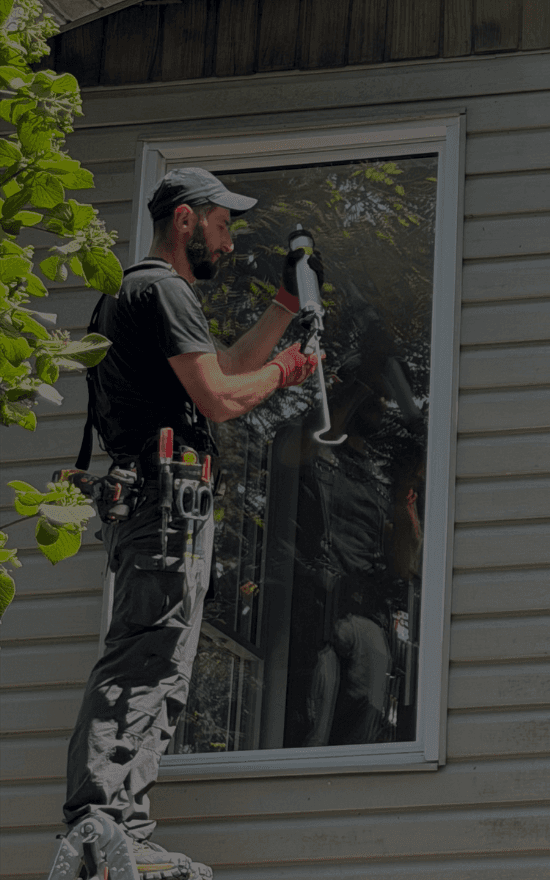
The new door needs to sit correctly so it opens smoothly, closes without being forced, latches cleanly, locks properly and makes consistent contact with the weather seals. The surrounding opening can then be appropriately insulated, sealed and finished.
A lot of that work disappears once the trim goes back on, but you'll notice the result every time you use the entrance.
A beautiful new front door is great in September. February is usually when you find out how good the installation really was.
Before the project is considered finished, the door should be opened, closed and locked several times to make sure everything feels the way it should.
The finished entrance shouldn't require a special technique.
Open it. Close it. Lock it. That's really all you should have to think about.


Choosing The Right Door
Once the opening and installation are understood, the rest of the project becomes much more personal.
This is where you're deciding what you actually want to come home to every day. Material matters, but so do the glass, colour, hardware and smaller finishing details that determine whether the new entrance feels like it belongs on the house.

How Much Glass Do You Want?
Adding glass can completely change an entrance, especially when the existing hallway feels dark.
A smaller insert can introduce some daylight without dominating the door, while larger glass panels can make the entrance feel considerably more open. Sidelights and transoms provide another option when the opening has room for them.

Privacy doesn't have to disappear in the process. Frosted, textured and decorative glass can bring in natural light while limiting the direct view into your home.
Think about this choice from inside as well as outside. The door needs to look good from the street, but you're the one who gets to live with the light it brings into the house.
Colours, Panels & Hardware
A new exterior door doesn't need to disappear into the exterior.
White and other neutral finishes can keep things understated, while black, charcoal and other available colours can create more contrast. Panel designs can push the entrance in a more contemporary or traditional direction, with glass providing another layer of customization.

Then there are the details you'll actually touch every day.
Handlesets, levers and locks can be coordinated with finishes such as black, satin nickel, brushed metallic and other available options, depending on the door configuration.
You don't need every upgrade in the catalogue. A few well-considered choices usually do more than adding details simply because they're available.
Make the Entrance Feel Like Part of the Home
The best replacement isn't necessarily the most elaborate one.
Sometimes a simple exterior door with the right colour and hardware is exactly what the house needs. Another entrance may benefit from glass, sidelights or a more substantial configuration.
What matters is that all those decisions work together.
The door should look like it was chosen for the home — not like the home had to work around the door.
