


Northline Windows & Doors
Publisher
Casement windows aren’t exactly the flashiest window style. They don’t have an unusual shape or a complicated way of opening. But walk through almost any Ottawa neighbourhood and you’ll see them everywhere. There’s a pretty good reason for that.
A casement window is hinged along one side and swings outward when you turn the handle. That simple design allows almost the entire opening to be used for ventilation. On a breezy spring afternoon, you can open the window wide. When February rolls around, you can close it tightly and forget about it.
The view is another big part of their appeal. Because there’s no sliding sash running through the middle of the glass, casement windows can provide a large, uninterrupted view outside. That can make a noticeable difference in living rooms, bedrooms and other places where you’d rather look at the backyard than a window frame.

They’re also surprisingly versatile. A smaller casement can work above a kitchen counter, while larger openings can combine an operating casement with fixed glass to bring more natural light into the room. You don’t necessarily need the same configuration at every opening.

Of course, casement windows aren’t automatically the right choice everywhere. They need space outside to swing open, and depending on the location of the window, another operating style may simply make more sense. That’s why it’s worth looking at how you actually use the room rather than choosing a window based on appearance alone.
Northline’s casement windows are custom-made for each opening, allowing the size, glass configuration and overall layout to be planned around the home. On this page, we’ll look at where casement windows work particularly well, whether they’re worth considering for your replacement project, and how they compare with tilt & turn windows.


Is Casement Worth It?
For many Ottawa homes, casement windows are one of those choices that simply make sense. They’re easy to operate, open wide when you want fresh air and provide plenty of glass without a sash cutting across the middle of your view.
But whether they’re worth choosing comes down to where the window is going and what you want it to do.
Wide Ventilation & a Clearer View
Unlike a sliding window, where part of the opening remains covered by another sash, a casement window swings outward and leaves most of the opening unobstructed.
That can provide plenty of natural ventilation during Ottawa's warmer months. Depending on the direction of the breeze, the open sash can even help catch moving air and direct some of it toward the room.
Casements also give you one larger area of glass without a horizontal meeting rail running through the centre. Put one overlooking a backyard, garden or tree-lined street and that cleaner view becomes much easier to appreciate.
A Tight Seal Matters in an Ottawa Winter
Nobody in Ottawa chooses windows based only on how they perform in June.
When a casement window closes, its locking hardware pulls the sash firmly against the frame and weatherstripping. With a properly manufactured and installed window, that compression-style closure can create a tight seal around the opening.

The complete window still matters. Double or triple pane glass, frame construction, weatherstripping and installation all contribute to overall performance, so choosing a casement sash by itself doesn't guarantee an energy-efficient window.
If thermal performance is particularly important for the room, you can also compare double pane windows and triple pane windows without giving up the casement operating style.
Cranks, Locks, Colours & Finishing Details
The crank is one of the reasons casement windows work particularly well in places such as above a kitchen sink, where reaching forward to push or slide a sash can be awkward.
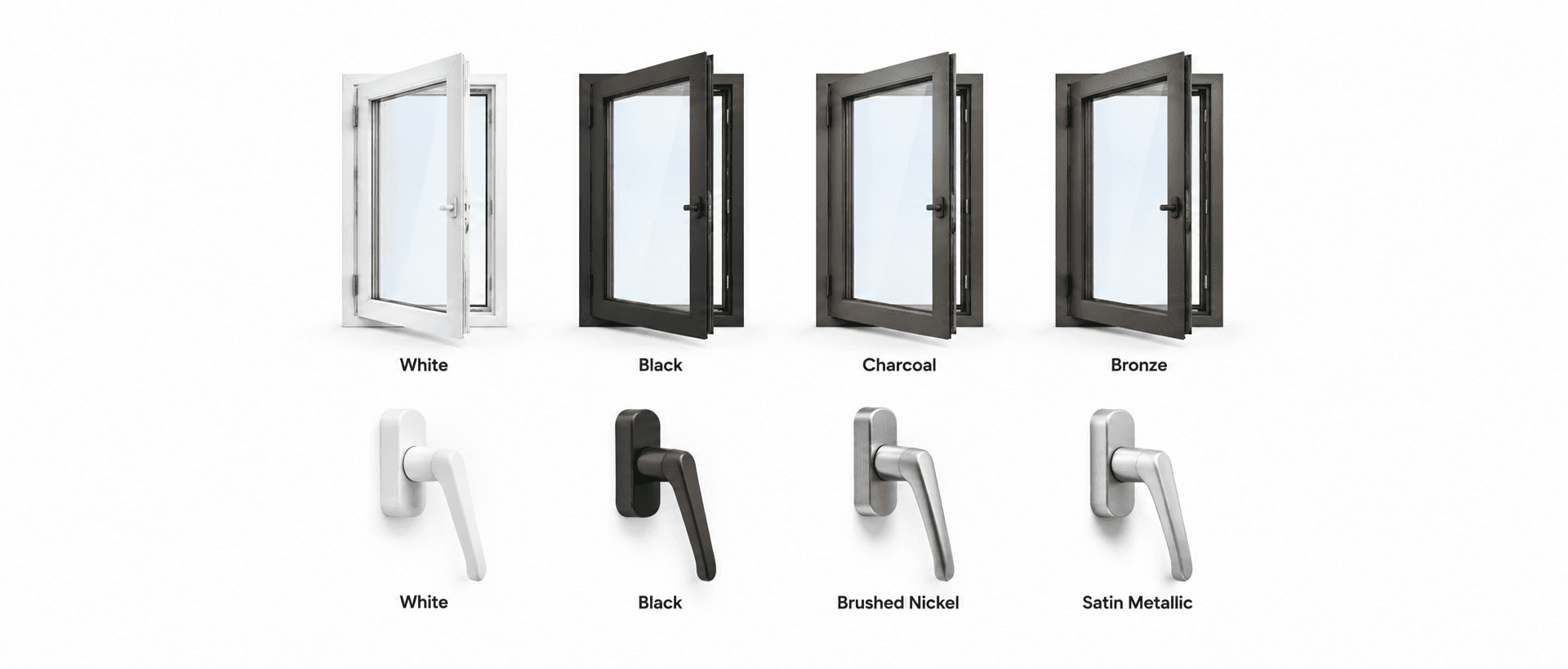
Hardware is also worth paying attention to when choosing the finished window. Handles and locks should be easy to operate, but they don't have to feel like an afterthought. Depending on the configuration, white or black hardware can blend into the frame, while brushed or satin metallic finishes can create more contrast.
The frame itself can change the appearance considerably too. White keeps a casement traditional and understated, while black, charcoal and darker exterior colours can create a more contemporary look. Grilles can add another layer of detail when you want something more architectural than one uninterrupted piece of glass.
And casements don't always have to stand alone. They can be paired with fixed windows when you want a larger glass arrangement while keeping selected sections operable.
Where Casement Windows Make the Most Sense
Casements can work well in bedrooms, living spaces and kitchens, but the outward-opening sash means you should always look at what's immediately outside.
A window facing a tight walkway, deck or another area where people regularly pass may be better suited to a different operating style.
Casements can also be relevant when planning certain egress window openings because of how widely the sash can open, although whether a particular window qualifies depends on the actual opening dimensions and applicable requirements.
That's why we wouldn't tell every homeowner to put casements throughout the entire house. In the right opening, they're simple, practical windows that do their job extremely well.


Ventilation
Casement and tilt & turn windows can look fairly similar when they're closed. Both can give you a large area of glass and plenty of ventilation.
It's when you reach for the handle that the difference becomes obvious.
One Opening Style or Two?
A casement keeps things simple: operate the crank and the sash opens outward. It doesn't take up usable space inside the room and can open wide when you want plenty of fresh air.
Tilt & turn gives you two operating positions. The sash can tilt inward from the top for controlled ventilation or swing fully inward from the side.
That additional flexibility is useful, but the inward-opening sash also requires enough clearance around furniture, countertops, blinds and anything sitting near the window.

Ventilation, Cleaning & Everyday Use
If you want a large opening and plenty of airflow, casement windows do that very well. The outward-opening sash can also catch a passing breeze and help direct some air toward the room.
Tilt & turn gives you more control over how much you open the window, while its inward swing makes accessing the exterior glass particularly convenient for cleaning upper-storey windows.

Neither approach is automatically better. They simply solve some everyday problems differently.
Which One Makes More Sense for Your Home?
If you value simplicity, wide ventilation and an outward-opening sash that stays out of the room, casement windows are a practical choice.
If controlled ventilation and easy interior access to the exterior glass matter more, tilt & turn may suit the opening better.
And you don't need to choose one style for the entire house. A casement over the kitchen sink and a tilt & turn in an upstairs bedroom can both make perfect sense.
The better approach is to look at how each room is actually used and choose the window that makes life a little easier there.
