


Northline Windows & Doors
Publisher
Vinyl windows are popular in Ottawa for a pretty simple reason: they’re easy to live with.
You don’t need to repaint them every few years, they work with a wide range of window styles, and they can be paired with different glass packages depending on how much performance you want from the finished window. For homeowners replacing several windows at once, that kind of flexibility can make the decision a lot easier.
They’re also a natural fit for our climate. Ottawa homes see freezing winter mornings, humid summer afternoons and just about everything in between. A good vinyl window helps create a reliable barrier through those swings without adding a long list of maintenance jobs to your weekend.

That said, not all vinyl windows are created equal.
The frame construction, reinforcement, glass package, weatherstripping, hardware and installation all matter. Two windows can both be labelled “vinyl” and still feel very different once they’re installed in the house.
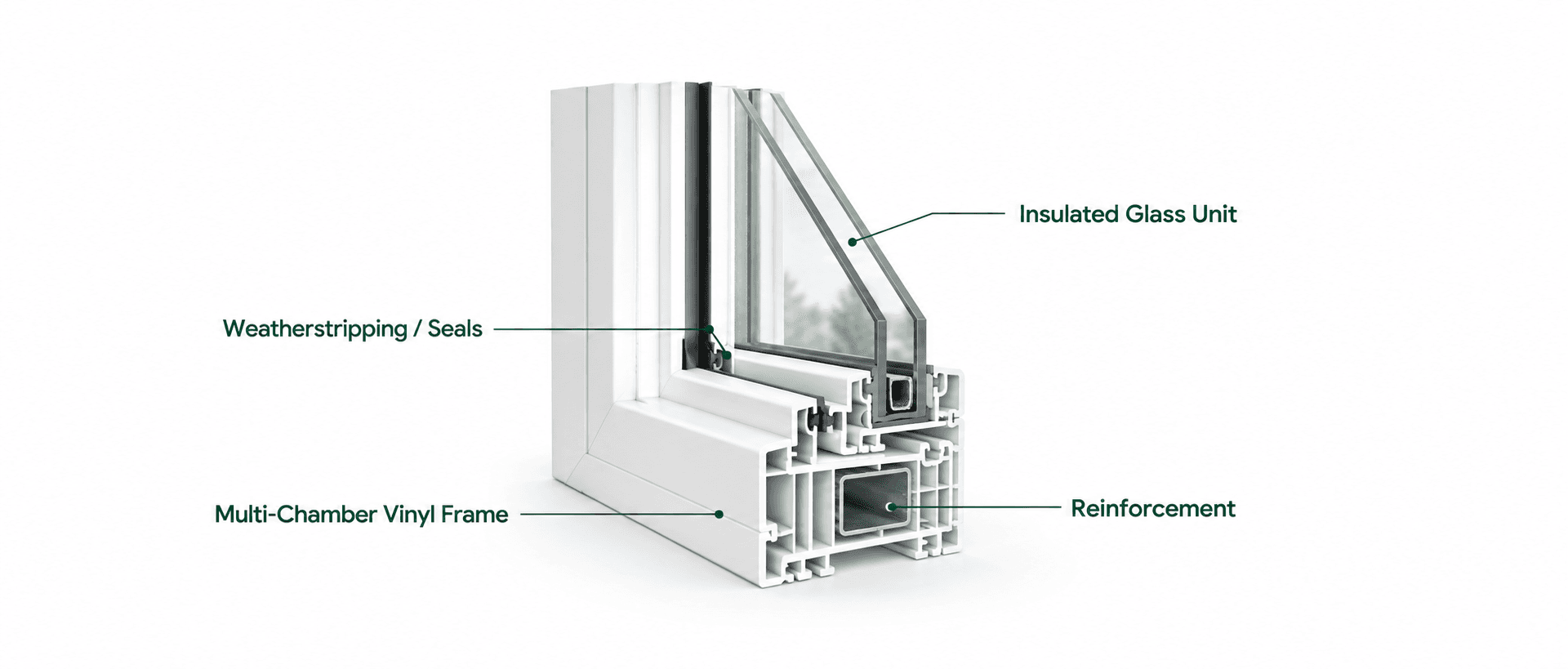
That’s why we don’t look at vinyl as the selling point by itself. We look at the complete window and how it’s going to perform in the room it’s actually going into.
In the right setup, vinyl can be a really practical choice for bedrooms, kitchens, living rooms and larger replacement projects where homeowners want dependable performance without a lot of upkeep.
Northline’s vinyl windows are custom-made for each opening and manufactured in Ontario, so the size, style and glass package can be planned around your home instead of forcing your home to work around a standard window.
On this page, we’ll break down why vinyl windows are such a popular choice in Ottawa, what affects how long they last, and what you should actually pay attention to when comparing one vinyl window with another.


Vinyl Window Basics
“Vinyl” tells you what the frame is made from. It doesn’t tell you whether the window is actually any good.
That distinction matters when comparing replacement windows. Two products can both be described as vinyl windows, look perfectly nice at first glance and perform very differently once they’ve spent a few Ottawa winters in your home.
So rather than judging a window by the material alone, it’s worth looking at what’s actually being built around the glass.
Start With the Vinyl Frame
A good vinyl frame needs to do more than hold the glass in place.
The construction of the frame, its internal design, reinforcement and the quality of its seals all contribute to how solid the finished window feels and how well it performs over time.
This becomes particularly important with larger windows. More glass means more weight, and the complete window needs to be designed to handle it without sacrificing operation or stability.
In other words, “vinyl” is the starting point — not the specification.
The Glass Package Matters Just as Much
You could have an excellent vinyl frame and still end up with the wrong window for your home if you don't pay attention to the glass.
Double pane windows and triple pane windows offer different levels of thermal performance, and the right choice can depend on the size and location of the opening, the room it's going into and what you're hoping to improve.
A large living-room window you sit beside every evening may deserve a different conversation from a small laundry-room window.
The goal isn't to automatically choose the most expensive glass package. It's to put the right glass into a well-built frame.
Casement, Awning, Hung & Sliding Vinyl Windows
One of vinyl's biggest advantages is how many different window designs can be built with it.
A casement can make sense over a kitchen counter where you want an easy-to-operate window. An awning can provide ventilation in a shorter opening. Single and double hung windows give you a more traditional appearance, while sliding windows can work well where an outward-opening sash would be inconvenient.
Fixed and picture configurations can also be incorporated when you'd rather dedicate more of the opening to glass and natural light.
That's why choosing vinyl doesn't really tell us which window belongs in the room. First we choose how you want the window to work. Then we build the configuration around it.
Vinyl Window Colours, Hardware & Design
Vinyl windows don't have to mean one basic white frame.
White remains a clean, versatile choice, but black, charcoal and darker exterior colours can create a much more contemporary appearance. Grille patterns can add traditional detail, while uninterrupted glass can keep the window simpler and more modern.
Hardware gives you another opportunity to finish the design. Depending on the window configuration, white or black handles can blend into the frame, while brushed nickel, satin or other metallic finishes can provide contrast.

If you're considering a darker colour, we'd rather choose a factory-finished option intended for the window than treat painting the vinyl afterward as the default solution.
Installation Is Part of the Window
Even a well-built vinyl window can disappoint if it isn't installed properly.
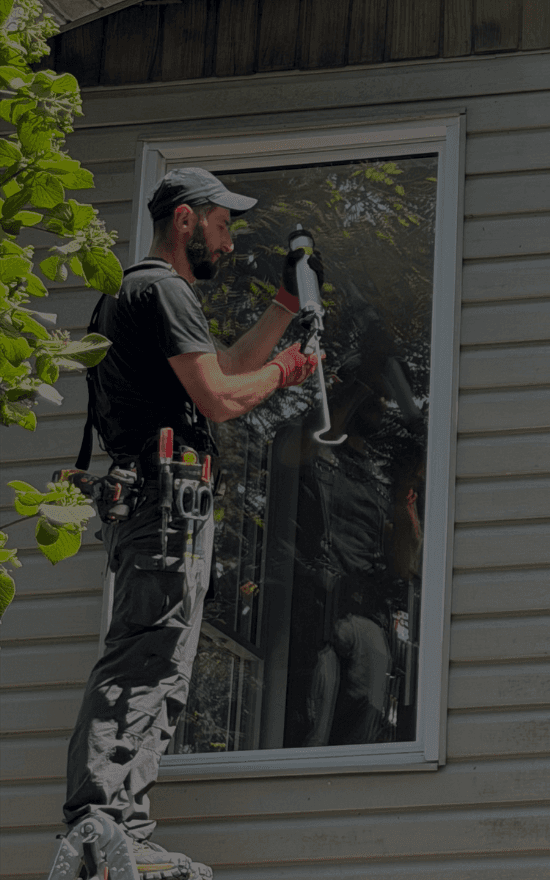
Measurements need to be accurate, the window needs to sit correctly in the opening and the surrounding area needs to be properly sealed. Get those details wrong and you can end up chasing drafts or operating problems that have very little to do with the vinyl itself.

That's why comparing vinyl windows in Ottawa shouldn't stop at the product. Who measures and installs the window matters too.
When you're planning a larger window replacement, the frame, glass, hardware and installation should really be considered as one complete system.


How Long Do They Last
Vinyl windows are meant to be a long-term part of your home, but there isn't a magic birthday where every window suddenly needs replacing.
How long they last depends on the quality of the window, installation, exposure to weather and how the individual components hold up over time. In Ottawa, that means dealing with cold winters, warm summers and plenty of temperature swings in between.
Watch How the Complete Window Is Aging
A vinyl window is more than its frame. The insulated glass, seals, weatherstripping and operating hardware all age alongside it.
You might have a frame that's still in perfectly reasonable condition while another component starts causing trouble first.
Pay attention to changes such as condensation between the panes, recurring drafts, difficult operation, damaged weatherstripping or locks and handles that no longer work as they should. Those clues tell you much more than the installation date alone.

Some Problems Can Be Repaired
A worn lock or piece of hardware doesn't automatically justify replacing the entire window.
Depending on its condition and construction, certain components may be repairable or replaceable. The conversation changes when you're dealing with failed sealed glass units, damaged frames, recurring air or water infiltration or several problems appearing together.
Ottawa winters have a way of exposing those weaknesses. A window can seem perfectly fine in September and become much less convincing once February arrives.
Replace Based on Condition, Not Just Age
If your vinyl windows still operate properly, remain well sealed and keep the rooms around them comfortable, there may be no reason to replace them simply because they're getting older.
Recurring drafts, failed glass seals, difficult operation or visible deterioration are much more useful reasons to start considering replacement.

So when someone asks “How long do vinyl windows last?”, we'd rather ask:
“How well are your windows still doing their job?”
That answer tells you whether it's time to repair something, start planning for replacement or leave a perfectly good window alone.
