


Northline Windows & Doors
Publisher
Sliding windows are refreshingly straightforward. Unlock the window, slide it over, let some air in. That’s pretty much the whole idea.
And for a lot of rooms, that simplicity is exactly what you want.
Unlike a casement window, there’s no sash swinging outward. Unlike an awning window, you don’t need to crank anything open. The sash moves horizontally along the frame, which makes sliding windows particularly useful in places where space around the window is limited.

Think about a basement window sitting close to ground level, a bedroom window beside a walkway, or even a room where furniture makes reaching a crank awkward. Sometimes you just want something that opens without making you think about it.
That doesn’t mean sliding windows are only the “simple option,” either.
Their wider proportions can work really well in rooms where you want to bring in plenty of daylight while still having the ability to ventilate the space. Depending on the configuration, one or more sections can slide while the remaining glass stays fixed.

And like any window, the way it opens is only part of the story.
The frame, glass package, weatherstripping and installation all contribute to how the finished window performs. That's especially worth paying attention to in Ottawa, where the same window has to deal with a freezing February morning and a hot, humid July afternoon.
Northline's sliding windows are custom-made for each opening and manufactured in Ontario, with different glazing and configuration options depending on the room and what you want from the window.
On this page, we'll look at where sliding windows work best, what affects their energy efficiency, and what homeowners should consider when comparing sliding window options for their home.


Sliding Window Basics
Sliding windows tend to make the most sense in places where you want fresh air without the window taking up any extra space when it opens.
The sash moves horizontally within the frame, so nothing swings into the room or projects outside the house. That simple difference can make sliders surprisingly practical in parts of the home where other operating styles feel a little awkward.
Bedrooms, Basements & Wider Openings
Bedrooms are a natural fit for sliding windows. They're straightforward to open when you want some fresh air, and the horizontal design works particularly well with wider wall openings.

Basements are another common application. Shorter, wider openings often suit the proportions of a slider, while the sash stays completely within the frame as it opens.
If the basement window needs to provide an emergency exit, however, don't assume a standard slider automatically qualifies. The actual clear opening and applicable requirements need to be considered, which is where a purpose-designed egress window may be necessary.
Great Where an Outward-Opening Sash Would Get in the Way
Imagine opening a window directly beside the path everyone uses to get to the backyard.
An outward-swinging sash might not be your first choice.
Because sliding windows don't project beyond the wall, they can work particularly well beside decks, patios, walkways and other busy exterior areas. The same advantage applies inside: furniture and countertops don't need clearance for an inward-opening sash either.
Everything happens within the window frame.
Sliding Window Locks, Latches & Tracks
A slider may be mechanically simple, but the parts it does have matter.
The sash needs to move smoothly along its track, while the lock or latch should hold it securely in the closed position. If an older sliding window becomes difficult to move, doesn't close properly or develops a loose latch, those components are worth checking rather than assuming the glass itself is the problem.

Depending on the design, removable or accessible sashes can also make cleaning the glass and track considerably easier.
It's not glamorous hardware, but you'll appreciate a smooth track and a lock that works properly every time you use the window.
Colours, Glass & Sliding Window Styles
Horizontal operation doesn't mean every sliding window has to look the same.
White frames provide a simple, traditional appearance, while black, charcoal and darker exterior colours can make a wider slider feel more contemporary. Grilles can introduce additional detail, or you can leave the glass relatively uninterrupted for a cleaner look.

You also have choices in the glass itself. Different double and triple pane configurations can be considered depending on the performance you're looking for.
That's worth remembering because “sliding” only describes how the window operates. The frame colour, glass package and finishing details still determine a lot about how the finished window looks and performs.
Simple Operation Is Really the Point
Not every window needs to be the architectural centrepiece of the house.
Sometimes you need a dependable window for a bedroom, basement or family room that opens easily, provides ventilation and doesn't require much thought.
If you'd rather have a large uninterrupted section of glass with ventilation handled elsewhere, a fixed window may make more sense. If you want the sash to open wide toward the exterior, a casement window gives you another approach.
Sliding windows find their lane when horizontal operation, straightforward ventilation and keeping the sash out of the way are the priorities.


Energy Efficiency
Sliding windows can absolutely be energy efficient, but the fact that a window slides doesn't tell you much about how well it will perform.
For an Ottawa home, it's better to look at the glass, frame, seals, weatherstripping and installation as one complete window.

Glass & Frame Construction Matter
A large portion of any window is glass, so naturally the glass package matters.
Sliding windows can use different glazing configurations, including double and triple pane options. Which one makes sense depends on the opening, the room and the level of performance you're looking for.
Vinyl frames are also commonly used for sliding configurations, but “vinyl” isn't a performance rating either. Frame construction and glass still need to be considered together.
A Moving Sash Still Needs a Good Seal
Unlike a fixed window, a slider has sections that need to move.
Weatherstripping and seals therefore need to allow the sash to travel along its track while helping limit unwanted air movement when the window is closed.
If an older slider starts feeling drafty, the glass isn't necessarily the problem. Worn weatherstripping, an improperly closing sash or deterioration around the frame can all contribute.
Installation Completes the Window
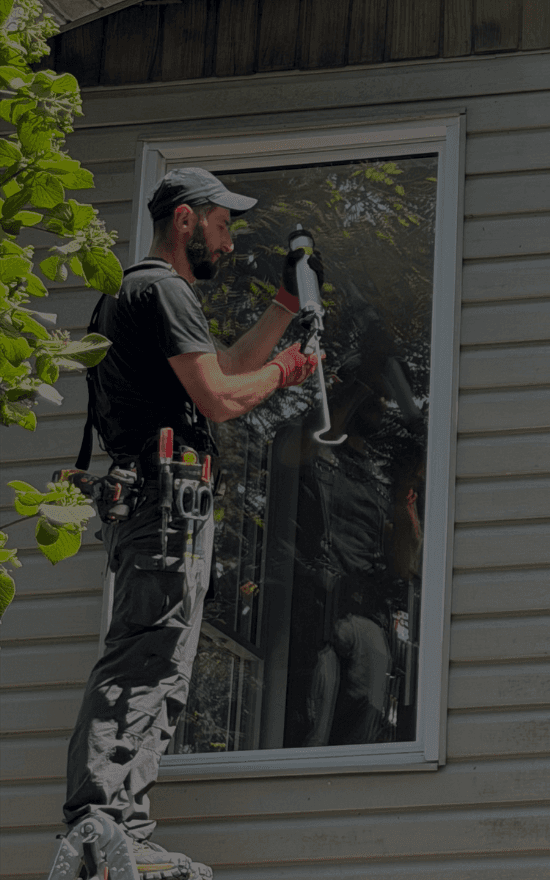
You can order a well-built sliding window and still undermine it with poor installation.
The opening needs to be measured correctly, the window needs to sit properly within it and the surrounding area needs to be appropriately sealed.
So don't get too caught up in whether sliding windows are inherently “good” or “bad” for energy efficiency. Choose a slider because its horizontal operation makes sense for the room, then build the window around the level of comfort and performance you want from it.
